
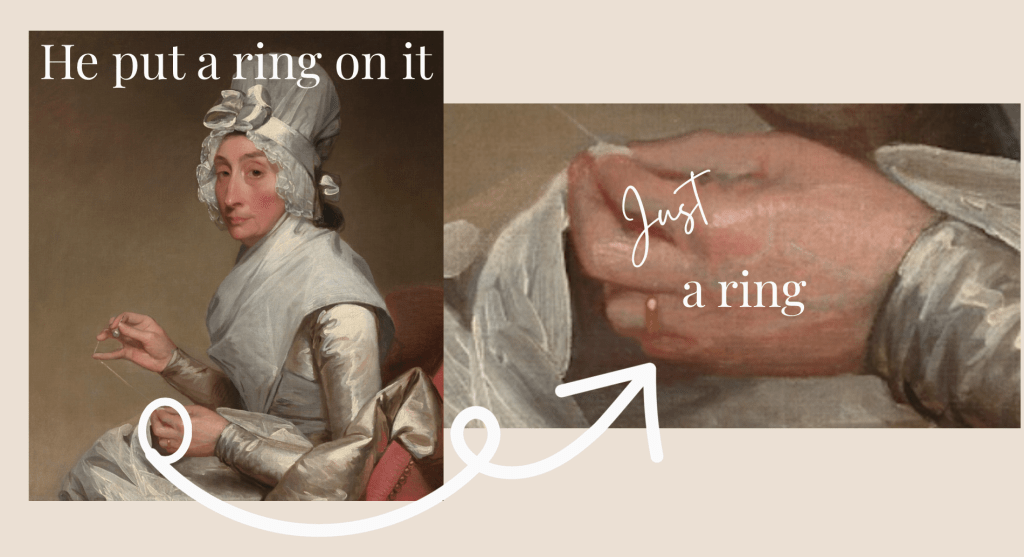
I don’t know about you, but Mrs. Richard Yates does not look very pleased with her basic wedding band. It was in the 1920s when Henry Oppenheimer came up with the idea of diamonds as engagement stones. Since then, gemstone choices have expanded, and there’s something to suit every bride’s style and budget. These days, couples can even use their love story to help guide which gemstone is best for their engagement ring.
Moissanite:
This gemstone is perfect for star-crossed lovers who found their way back to each other, or for someone who knows they want to become a parent—or already is one.
What is Moissanite?
Moissanite is naturally occurring silicon carbide. It was first discovered in a meteorite, and we now know it can also occur naturally on Earth—it has even been found as an inclusion in natural diamonds. However, most of the moissanite used in jewelry today is lab-created. The origin story of this gemstone makes it especially meaningful for couples who love cosmology and astrology.
Should I have a moissantie stone for my engagement ring? Practically speaking, moissanite is ideal for someone who wants a sparkling stone but also envisions a future as a parent. If the ring ever gets damaged, it’s affordable to replace—because let’s face it, you’ll have bigger expenses to think about! Plus, your sweet babies will love gazing into the rainbow sparkle that’s unique to moissanite. It rates 9.25 on the Mohs’s hardness scale making it durable for everyday wear. Its popularity has seen a steady increase since 2018.
Natural Diamonds:
Because natural diamonds often have inclusions, they are a beautiful choice for couples who connect over a shared love for nature and the Earth. While diamonds are traditionally valued for being nearly flawless or having only very small inclusions, couples who appreciate the natural world can intentionally choose diamonds that feature visible inclusions. These can include:

- Crystal inclusions – minerals trapped within the diamond
- Needles – thin, elongated crystal structures
- Pinpoints – tiny crystals that appear as small dots under 10x magnification
These natural features can make each diamond unique—just like your relationship.
What Are Natural Diamonds?
Diamonds are the only gemstone made entirely of one element: carbon. About 99.95% of a diamond is pure carbon; the remaining 0.05% consists of trace elements that are not part of the diamond’s essential chemistry—these are known as inclusions. Inclusions can influence a diamond’s color and sometimes even its shape.
How Do I Know It’s Not a Blood Diamond?
To avoid the harmful environmental and ethical impacts of modern diamond mining—including conflict or “blood” diamonds—the most sustainable option is to purchase a pre-owned diamond. Shopping for secondhand rings or loose diamonds, then resetting them in a new design, is a cost-effective and eco-conscious way to get the natural diamond of your dreams.
Look for diamonds graded SI1 to I3 on the clarity scale. These stones have visible inclusions that are usually only noticeable under 10x magnification. Carry a small magnification device (like a jeweler’s loupe) on your keychain to spot and admire the unique inclusion that represents your bond.
Note: Choose a ring setting that will help protect your diamond, as visible inclusions can slightly reduce its durability.
Lab Diamonds:
These are perfect for couples who aspire to glamour and perfection. If you’re the type of couple who takes honeymoons in Paris and hosts black-tie dinner parties, lab-grown diamonds are for you. While lab-grown diamonds can still have inclusions, they typically have far fewer than natural diamonds. This is as close as you can get to a truly flawless stone.
Are Lab-Grown Diamonds Real Diamonds?
Yes—lab-grown diamonds are real diamonds. Chemically, structurally, and visually, they are identical to natural diamonds. The only way to distinguish them is:
- By checking for a laser inscription on the girdle, which indicates it’s lab-grown
- Or by reviewing the certificate that accompanies all diamond purchases, which will specify whether the diamond is lab-grown
Lab-grown diamonds offers luxury because of the fact that is it the most perfect kind of diamond you can find.
Sapphire:
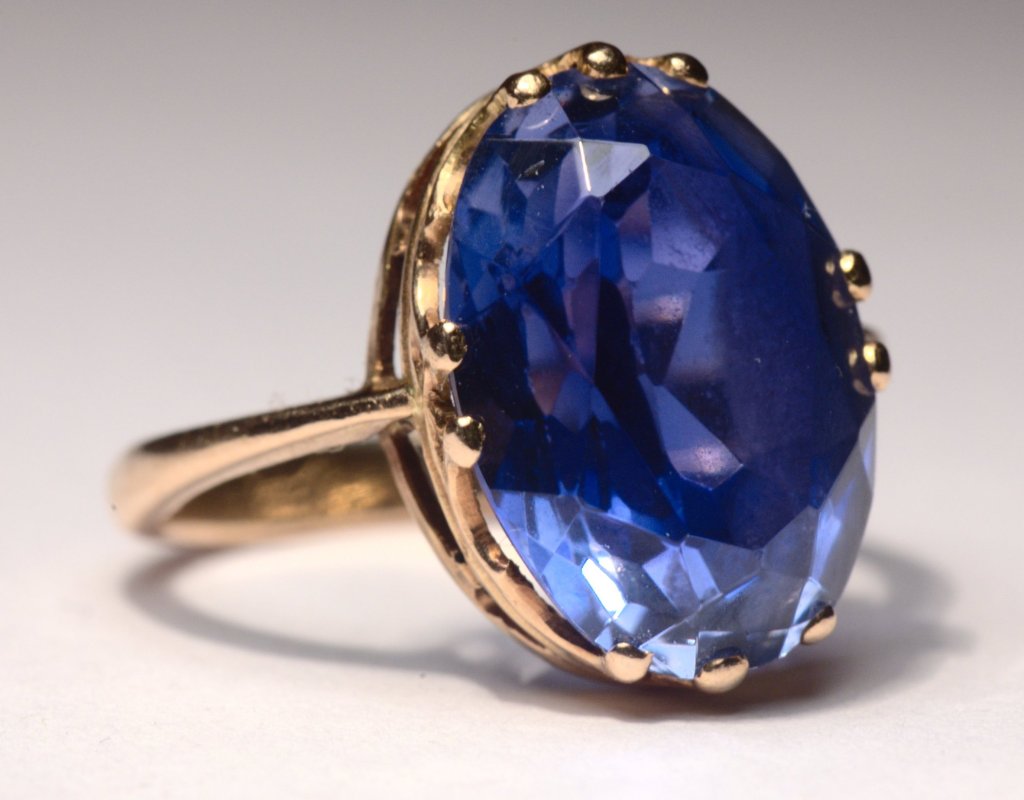
For couples who want a splash of color in their engagement rings without sacrificing long-term durability, sapphire is a perfect choice. Available in a wide variety of colors and intensities, sapphires offer endless opportunities to create a unique color story that reflects your love story.
What is Sapphire?
Sapphire belongs to the corundum family of gemstones and ranks 9 on the Mohs hardness scale, making it an excellent choice for everyday wear—especially in engagement rings.
While blue is the most well-known sapphire color, sapphires also come in pink, purple, yellow, and orange. The most valuable sapphires typically display rich, deep hues.
For couples drawn to the colors of aquamarine or emerald, sapphire is often a better alternative due to its significantly greater hardness and durability. Unlike softer stones like emerald or aquamarine, sapphire can withstand daily wear without the same risk of damage—making it as practical as it is beautiful.
Sources:
Moissenite: Memorial of Charles Milton | American Gem Society
Natural Diamonds: Brilliant Earth | GIA Diamond Description
Sapphire: GIA Sapphire Quality Factors
 Ellie The Bride